
The participation of the Robotics Institute for Dependency in the Congress reinforces its commitment to a person-centred care model.
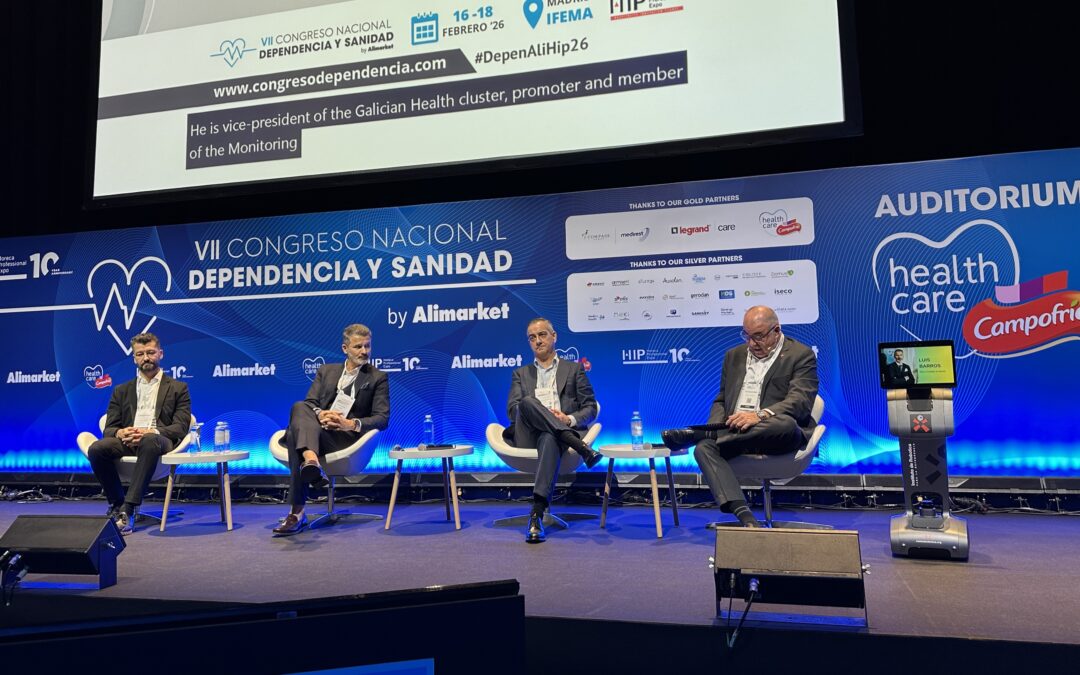
From 16 to 18 February 2026, the Robotics Institute for Dependency participated in the 7th National Congress on Dependency and Healthcare by Alimarket, held at IFEMA Madrid, as part of HIP 2026. The meeting brought together professionals from the sector to discuss a question that is as direct as it is necessary: can technology further humanise care?
Far from proposing a theoretical debate, the conference opened up a space for practical reflection on how digitisation, robotics and other technological advances can contribute to professionalising social and health care without losing sight of what is essential: people.
In this context, IRD Deputy Director Jordi Cerezuela moderated the panel discussion ‘Social and healthcare technology. Success stories’ in his capacity as director of the Ave Maria Foundation. This was a space for dialogue with leading figures in the sector and professionals from different fields, in which real experiences were shared on how innovation is already having a tangible impact on centres and on the lives of people in situations of dependency.
The shared vision was clear and widely agreed upon: technology does not replace care, it enhances it. It automates processes, optimises resources and, above all, frees up professional time to devote to what is truly important: more personalised, closer and more humane care. In this sense, innovation only makes sense when it translates into measurable well-being for people.
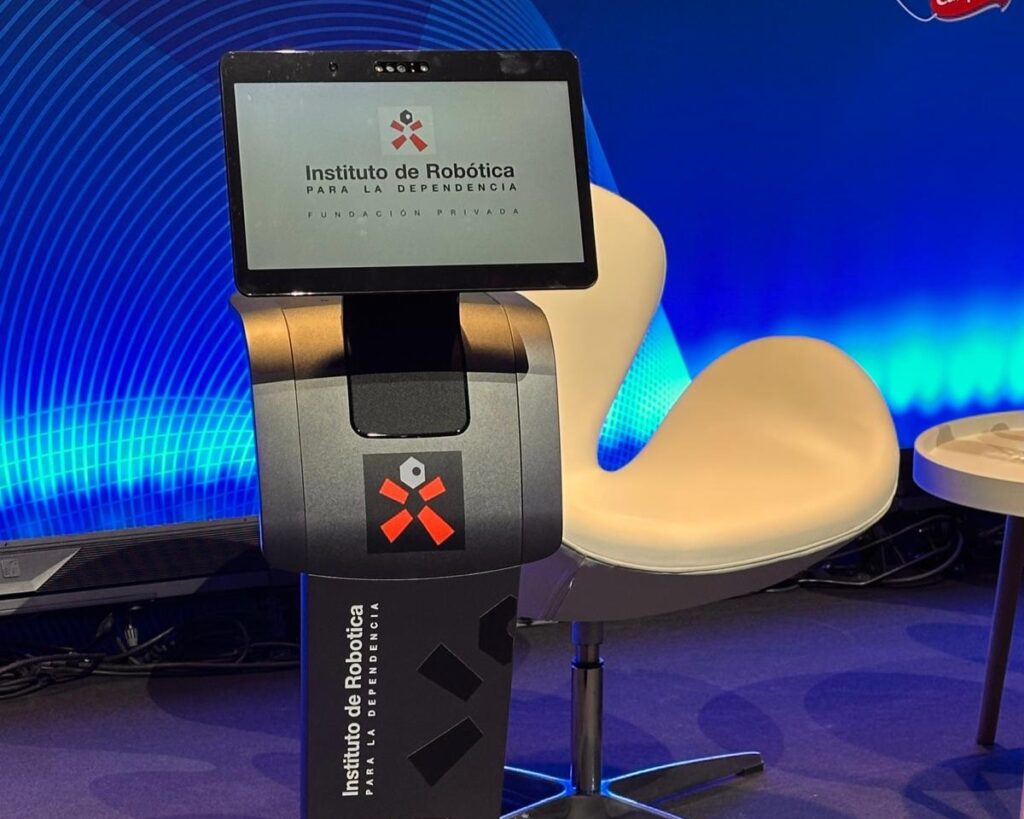
During the session, our Temi robot accompanied the presentations, providing information and supporting interaction. Its presence was not symbolic, but rather a practical demonstration that assistive robotics is already part of the current care model and can be naturally integrated into real environments.
IRD principles in action
Person-centred innovation. Technology only makes sense if it responds to real needs. That is why the IRD promotes solutions — from algorithms to assistive robotics — aimed at improving the quality of life of people in situations of dependency. The round table on success stories showed how these tools are already bringing this promise closer to everyday reality in nursing homes and day centres.
Professionalisation of care. The conference highlighted that the transformation of the social and healthcare sector requires investment, new organisational models and the intelligent integration of technology. In line with this, the Institute is committed to training, knowledge sharing and applied innovation as levers for better and more efficient care.
Solid alliances. Participation in the meeting has enabled the Robotics Institute for Dependency to generate new connections and strengthen relationships with professionals and institutions in the social and healthcare sector. This exchange opens the door to future collaborations and applied innovation projects based on shared knowledge and real challenges in care environments.
Looking ahead
The experience at the National Dependency and Healthcare Congress by Alimarket reinforces a clear idea: the change in the care model is not temporary; it requires commitment and shared decisions. Moving towards higher quality care means listening to users and professionals and, at the same time, rigorously and usefully integrating technology into care processes.